

Branding Colours and Their Meanings
Colour plays a significant role in branding and can greatly influence how customers perceive your brand before they've even registered the words used in your business name.
If you were asked to assign each of these examples to a fish hatchery, an apple U-Pick, and an organic farm, you'd probably pick the blue one for the hatchery, red for the U-Pick, and green for the organic farm.
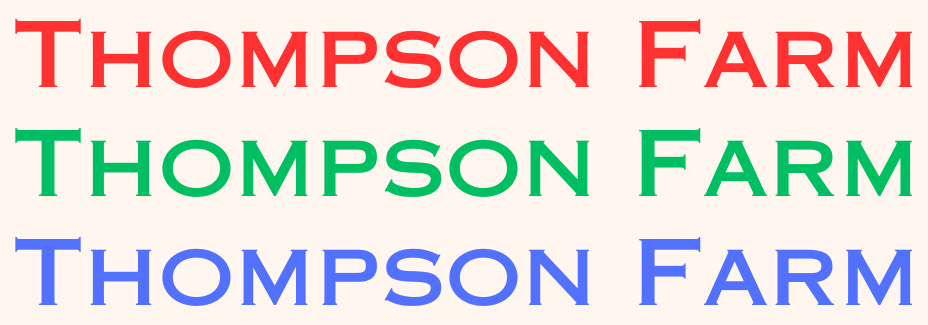
Let's take a look at some basic colours and the meanings they convey to customers. It's important to note that the message a colour holds can change based on the particular hue, shade, and tone of that colour. Different colours evoke specific emotions and associations, making it crucial to choose hues that align with brand values and resonate with your target audience.
Black: Black is often associated with power, sophistication, and mystery. It can create a sense of elegance and authority, making it a popular choice for luxury and high-end brands. Black can also convey seriousness and professionalism, making it a good choice for industries such as law or finance.
White: White is often associated with purity, cleanliness, and simplicity. It can create a sense of openness and minimalism in branding, making it a popular choice for brands that want to convey a sense of clarity and simplicity. White can also be seen as a blank canvas, which can be beneficial for brands that want to showcase their products or services without distraction. It can be difficult to read, so background colours and borders can be important factors to consider when using white.
Red: Red, a powerful colour that evokes strong emotions, is often associated with passion, energy, and excitement. In branding, it can be used to create a sense of urgency or to grab attention. It's a popular choice for brands that want to convey a sense of power, such as sports teams or automotive companies. It's commonly used in the food industry (Coca-Cola, McDonald's) because it can stimulate appetite.
Orange: Orange, a warm and vibrant colour, represents enthusiasm, creativity, optimism, energetic and playful. It's a combination of red's energy and yellow's friendliness. It can create a sense of warmth and energy, making it a popular choice for food and beverage companies. It's also associated with youthfulness, making it a fitting choice for brands targeting younger audiences. Brands like Nickelodeon and Fanta use orange to convey fun and creativity.
Yellow: Yellow, a bright and cheerful colour, is associated with happiness, optimism, wamth, and creativity. In branding, it can create a positive and energetic vibe, making it popular for businesses that want to convey a sense of fun and playfulness, like brands that want to create a friendly, approachable image (Snapchat, IKEA). It can also be difficult to read on some backgrounds.
Green: Green, associated with growth, harmony, and nature, green conveys balance, tranquility or health in branding. It's popular for brands promoting eco-friendliness or health, like organic food companies or environmental organizations. It's used by companies like Whole Foods and Starbucks to create an association with nature and health.
Blue: Blue, a calming colour associated with trust, reliability, and peace, creates a sense of security and stability in branding. It's often used by financial and tech companies that want to convey reliability and professionalism. Corporations like Salesforce and PayPal use blue in their branding to convey reliability and professionalism.
Indigo: Indigo, a deep and mysterious colour, represents wisdom, intuition, spirituality and royalty. In branding, it can convey depth and sophistication, making it fitting for luxury or spiritual brands. It's also associated with intelligence, making it suitable for educational or intellectual brands.
Violet: Violet, a creative and imaginative colour, is associated with luxury, spirituality, and creativity. In branding, it can convey sophistication and imagination, making it suitable for high-end or artistic brands. It's also associated with spirituality, making it fitting for spiritual or wellness brands. It's often used by beauty and luxury brands (Tiffany & Co., Cadbury) to denote elegance and high quality.
Strategic use of colour combinations or unique palettes can help your brand stand out from competitors, reinforcing brand identity and creating a lasting impression on customers.
Consistent use of colour across all brand materials — from logos and packaging to websites and advertising — helps build brand recognition. Colour consistency ensures that consumers can immediately identify your brand, increasing familiarity and trust.
Business owners must consider the cultural context when choosing colors, as colours can have different meanings in different cultures. For example, while white is associated with purity and weddings in many Western cultures, it is traditionally a color of mourning in some Eastern cultures.
Understanding the target audience is crucial when selecting brand colors. Depending on gender, age, and cultural background, certain colors might appeal more to specific groups. For instance, brighter and more vibrant colors might appeal more to a younger audience, while subtle tones might attract an older demographic.
Choosing unique and distinctive colors can help a brand stand out in a crowded market. This differentiation ensures that the brand is distinguishable from its competitors and can capture consumer attention more effectively.
The strategic use of color in branding can elicit the desired emotional response, communicate key brand messages, and influence consumer behavior. However, it's not just about choosing a color that looks good; it's about understanding the psychology behind color choices, being consistent in its application, considering cultural factors, knowing the target audience, and differentiating from competitors. Successful brands harness the power of color to create a strong and memorable identity that resonates with their target market.

Solo Marketer's Toolbox
Enter your email below to receive our weekly newsletter with marketing tips for your small business.
Created with ©systeme.io


